4 August 2026
Potato Grading Machine Price in India: What to Know Before You Buy
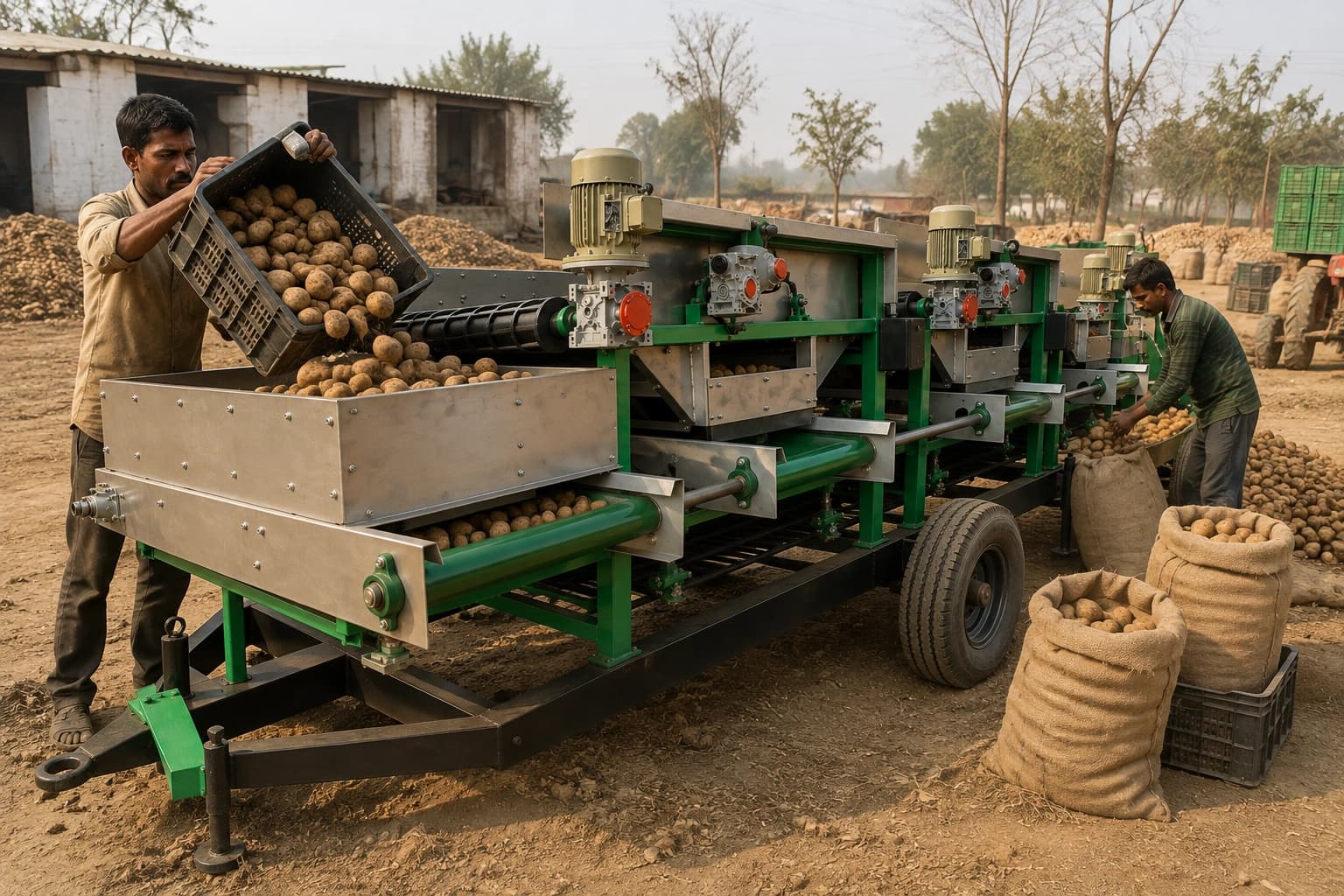
If you sell potatoes into mandis, cold storage, or supermarkets, you already know buyers judge size uniformity first. Sorting that by hand takes a lot of workers and still comes out uneven. A grading machine fixes both problems, but the price question comes up fast, so here is what actually goes into it.
What the machine actually does
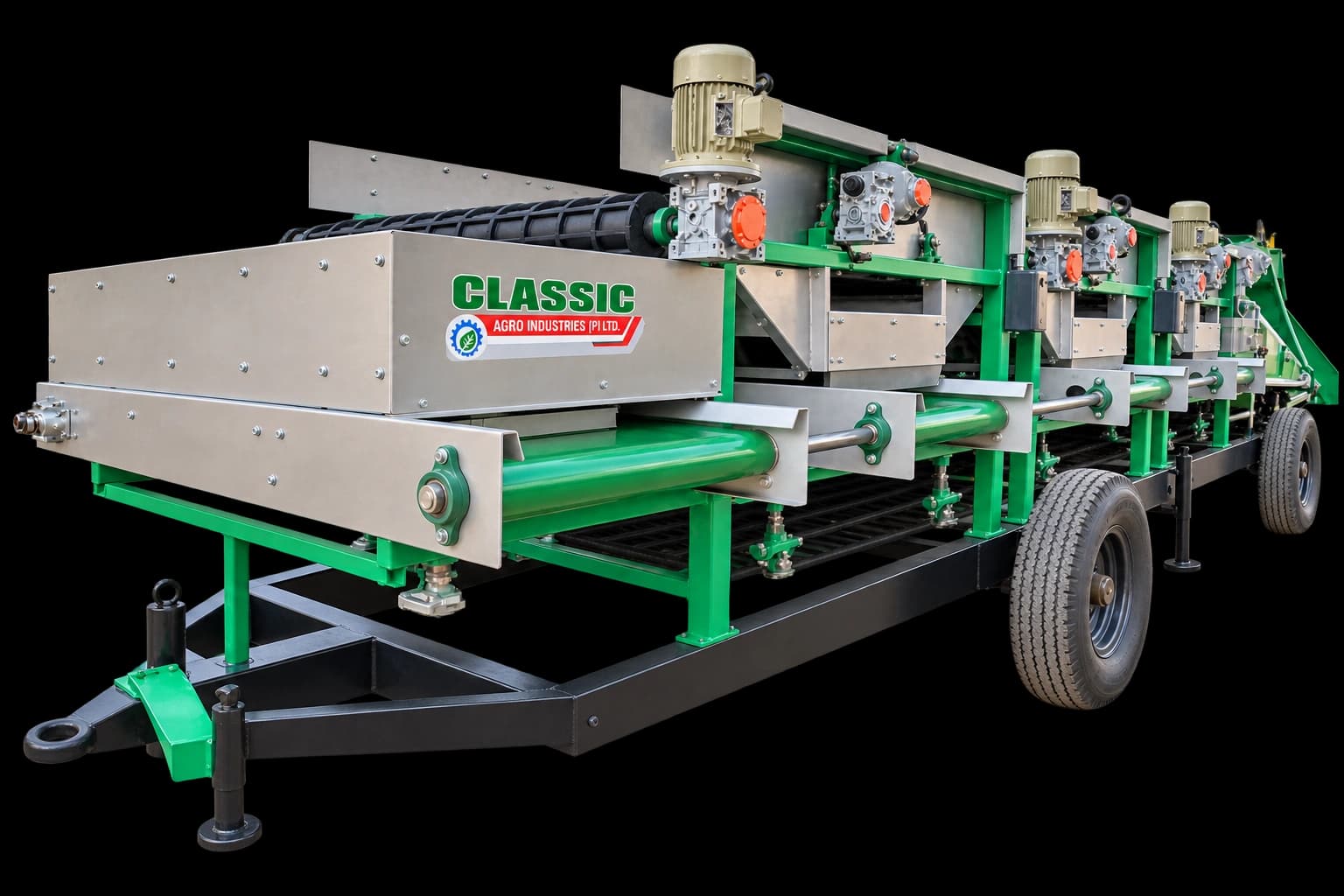
Potatoes move over a sensor-and-roller bed that sorts them into large, medium, and small, plus a separate output for damaged or undersized ones. The sizing is gentle, so skins do not bruise or split during the sort. Most setups run between 2 and 10 tons an hour, and the motor size scales with that, usually somewhere between 7 and 15 HP.
What changes the price
Capacity is the main factor, same as with any grading line. A machine built for 2 tons an hour is a smaller frame with a smaller motor than one built for 10 tons an hour, so the price moves with that.
Body material is the next factor. Our standard build uses powder-coated mild steel, which holds up well and keeps cost reasonable for most mandi and storage operations. A full setup usually weighs somewhere between 4 and 5 tons, which is a decent rough sense of how much machine you are buying.
How many size grades you need also matters a little, though potato buyers are usually less strict about this than fruit buyers. Large, medium, small, and a reject output covers most mandi and supermarket requirements without needing extra bands.
What to tell us before asking for a price
Tell us your daily dispatch volume, especially on your busiest cold storage day, not an average day. Let us know if you are selling to mandi buyers, supermarket chains, or both, since that can affect how the size bands get set. With those two answers, we can give you a real number instead of a rough guess.