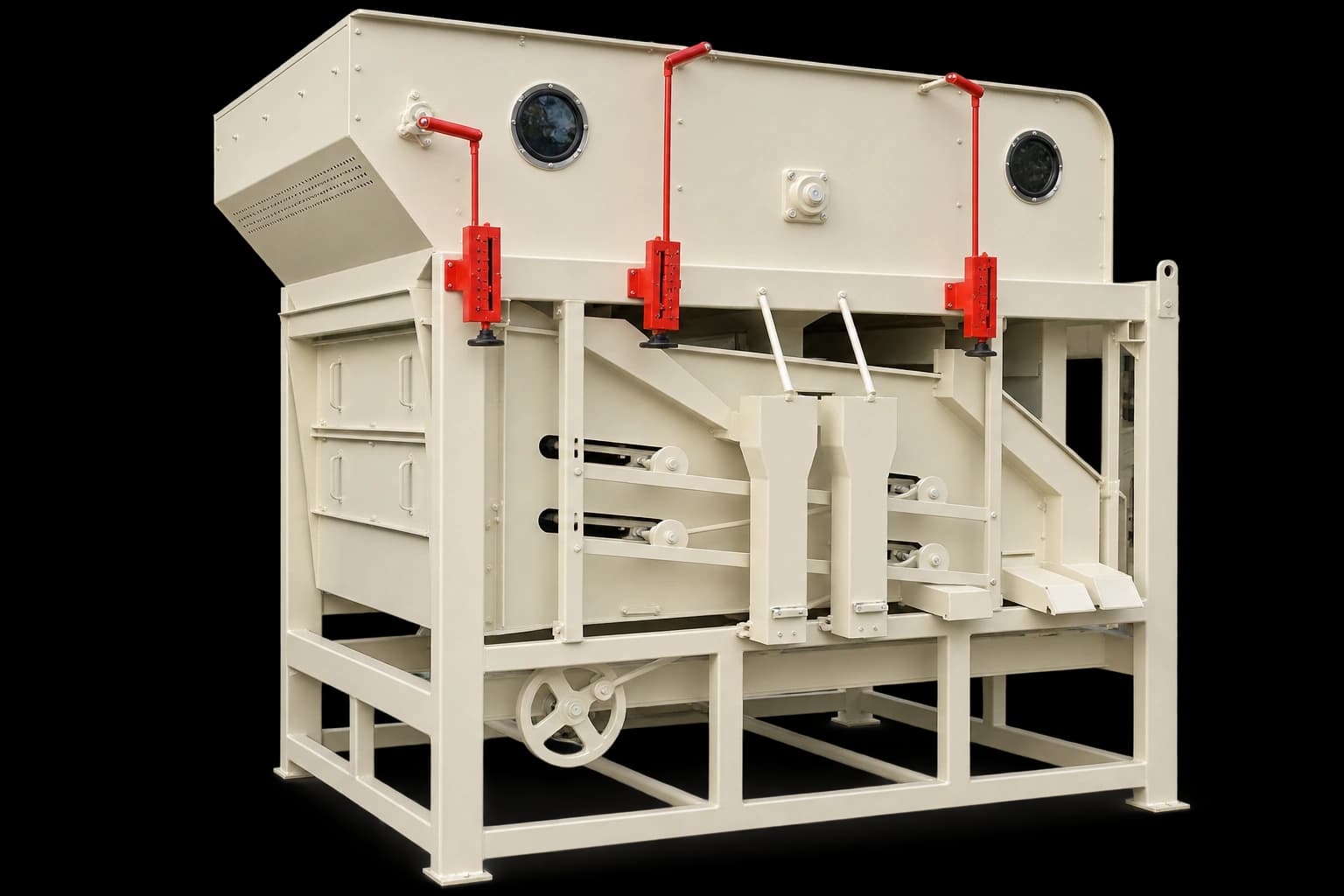
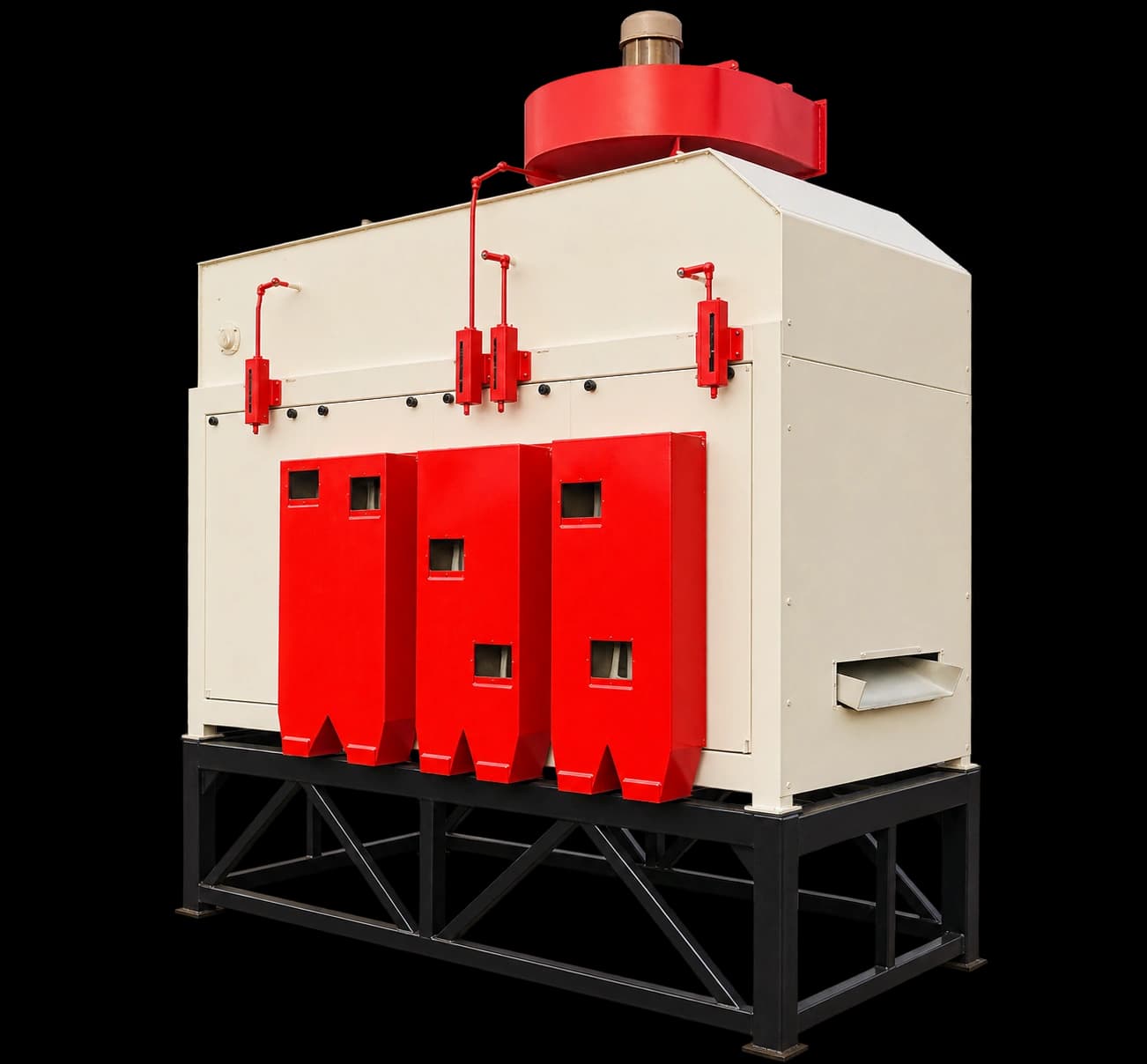
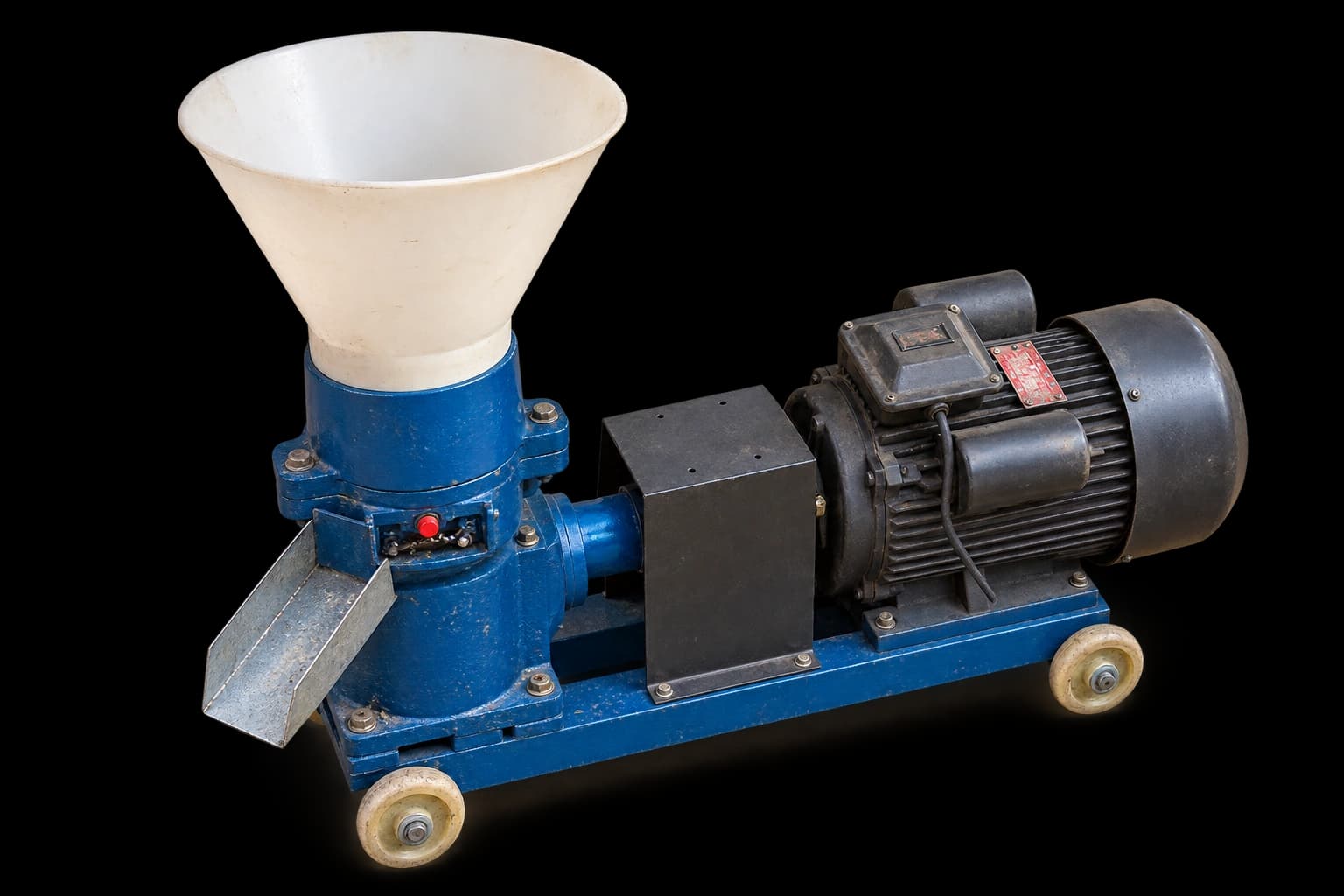
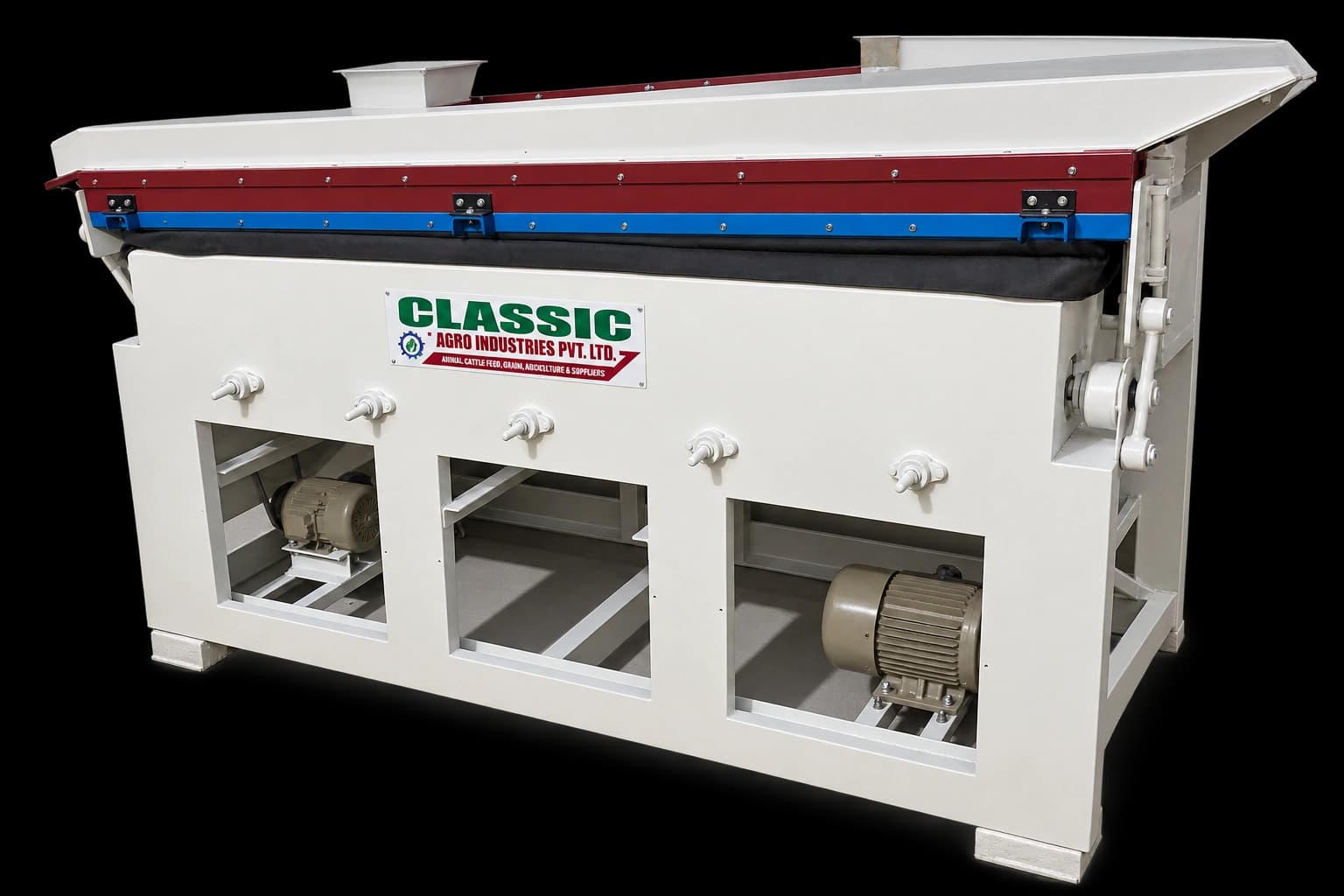
Destoner Machine
Separates stones and grit from grain, seed, and pulses.
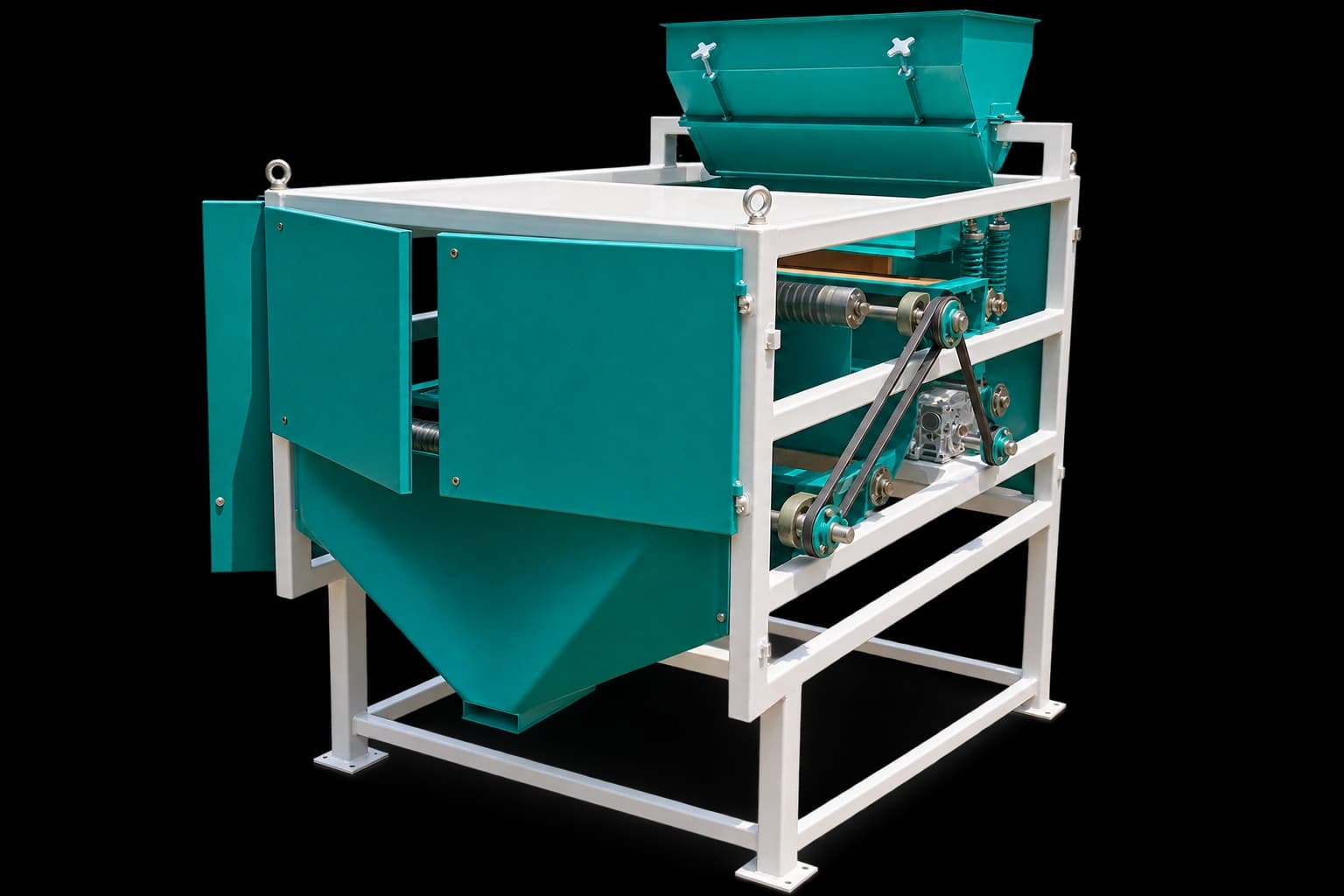
Destoner Machine specifications.
- Capacity
- 1–8 tons/hour (wheat basis)
- Motor
- 2 HP, 3-phase, 440V
- Body Material
- Mild steel
- Dimensions (L×W×H)
- 5 × 5 × 6 ft
- Weight
- 700 kg
- Warranty
- 1 year
All specifications vary by configuration. Ranges shown span our smallest to largest build for this model. Tell us your requirement and we'll spec the exact machine.
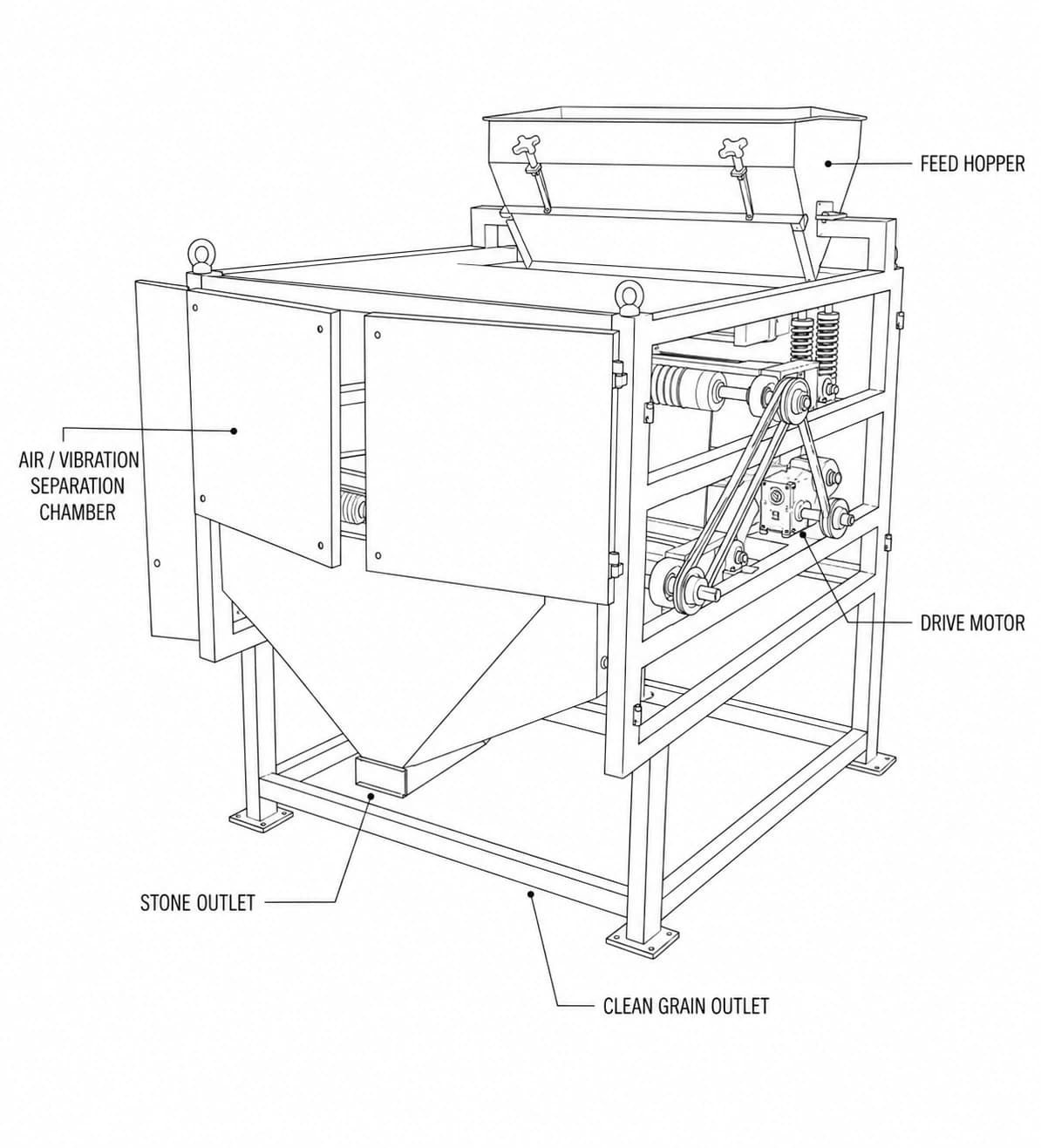
How the Destoner Machine works
Stones and hard grit mixed into grain aren't just a quality issue. They can damage milling equipment further down the line. This machine separates them out using a combination of air, vibration, and screens, so rice mills, flour mills, and spice units can protect their equipment while also delivering a cleaner finished product.
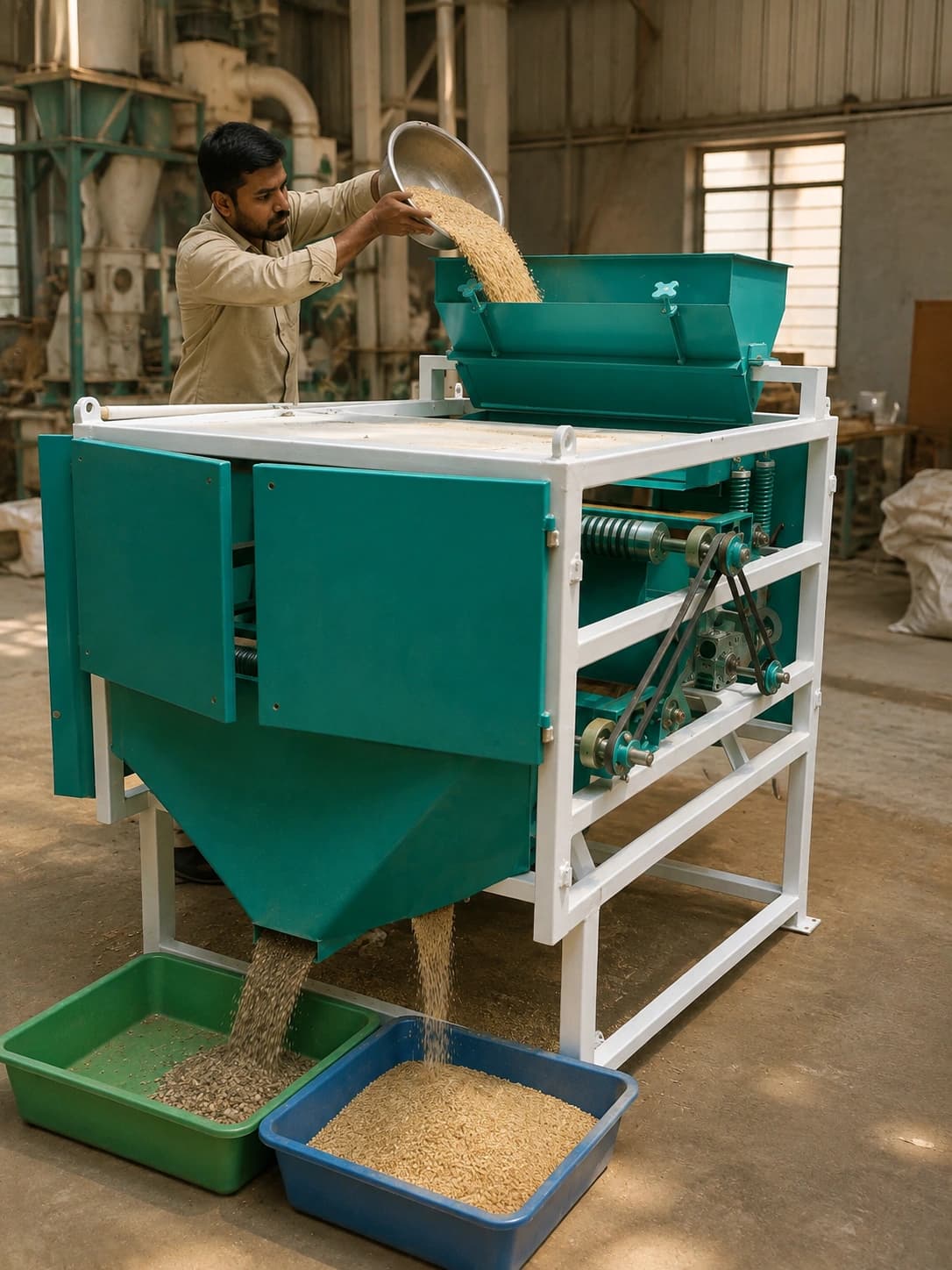
Key features of the Destoner Machine.
Choose the type that fits your material.
Vibro Type Destoner
Screening and grading by size doesn't catch everything. Stones, metal fragments, and glass that happen to match the seed's size slip straight through. This variant sorts on weight instead: seed lot rides across a vibrating deck that separates out anything denser than the seed itself, catching heavy admixtures a sieve or standard destoner alone would miss.
Magnetic Destoner
Iron fragments and mud balls mixed into rice, wheat, dal, chana, and soya need a different kind of separation. This variant uses a high-intensity neodymium rare-earth magnet, available in N-40 to N-52 grade, up to 13,000 gauss, to pull iron impurities out of the material stream with accuracy up to 99%, while drawing no more than 2 HP.
Destoner Machine FAQs.
How does it tell stones apart from grain?
Air and vibration work together to move lighter grain one direction and heavier stones another, with screens catching what's left.
Is this mainly for large mills, or does it suit smaller operations too?
It's used in both: anywhere grain, seed, or pulses are processed, stone contamination is a risk worth removing at any scale.
Can it run without an electricity supply?
The standard unit runs on electricity, though diesel-engine variants are available for sites without reliable power.
What's the benefit beyond just cleaner grain?
Removing stones before milling also protects the mill's own equipment from the wear and damage stone contact causes over time.
Is this the same as a chawal saaf karne wali machine (rice cleaning machine)?
Yes, rice mills use this exact machine to pull stones and grit out of paddy and milled rice before packing, alongside wheat, dal, chana, and soya lines.
Get pricing and specs for the Destoner Machine.
Tell us your crop, daily volume, and shed size and we'll recommend a configuration and quote, usually within one business day.