19 August 2026
Which Conveyor Type Do You Actually Need?
A lot of first-time buyers ask for a conveyor without knowing there are a few different types, each built for a different job. Picking the wrong one means either paying for features you do not need, or buying something that cannot actually do the job. Here is a plain way to think about it.
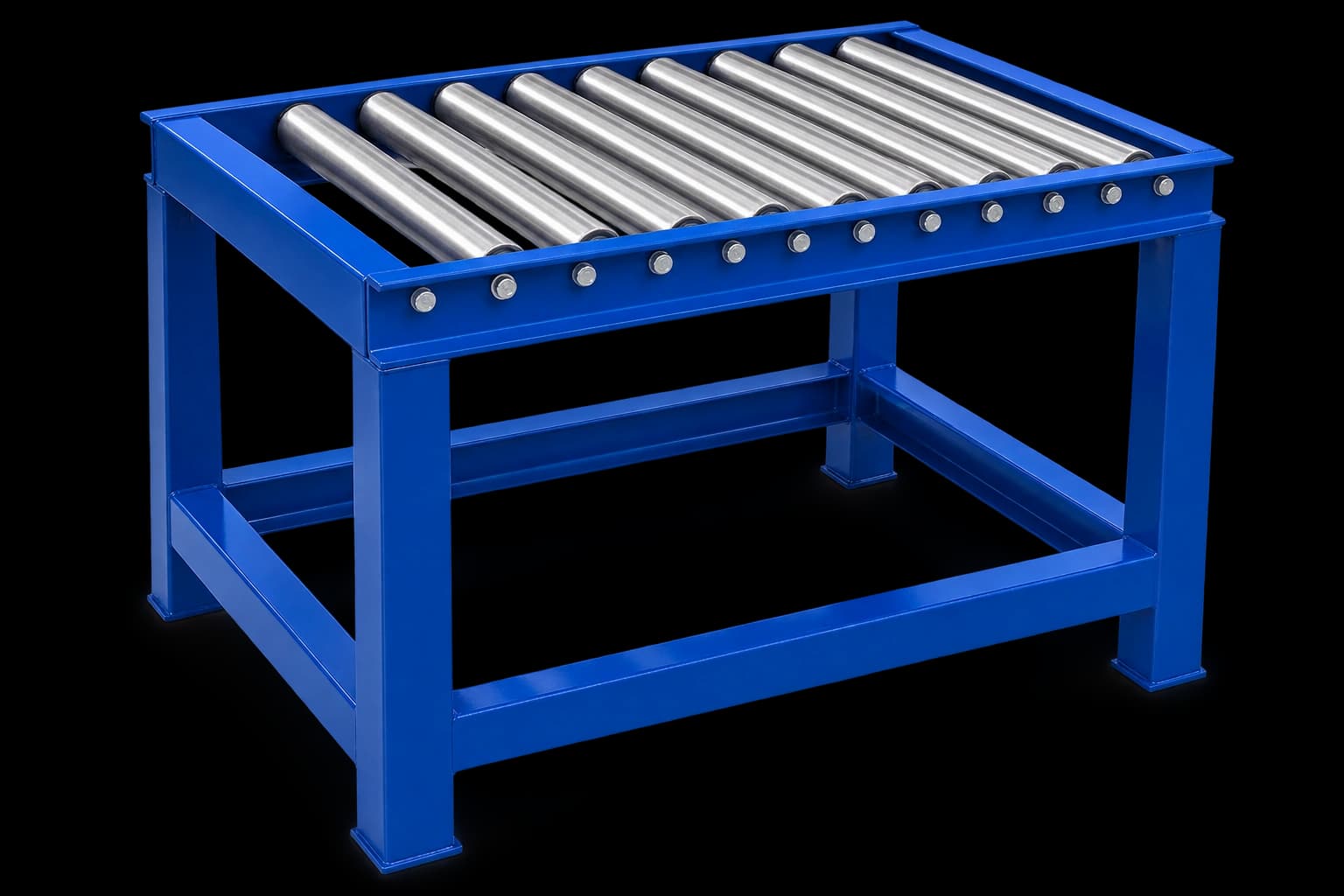
Roller conveyor: for moving crates and boxes
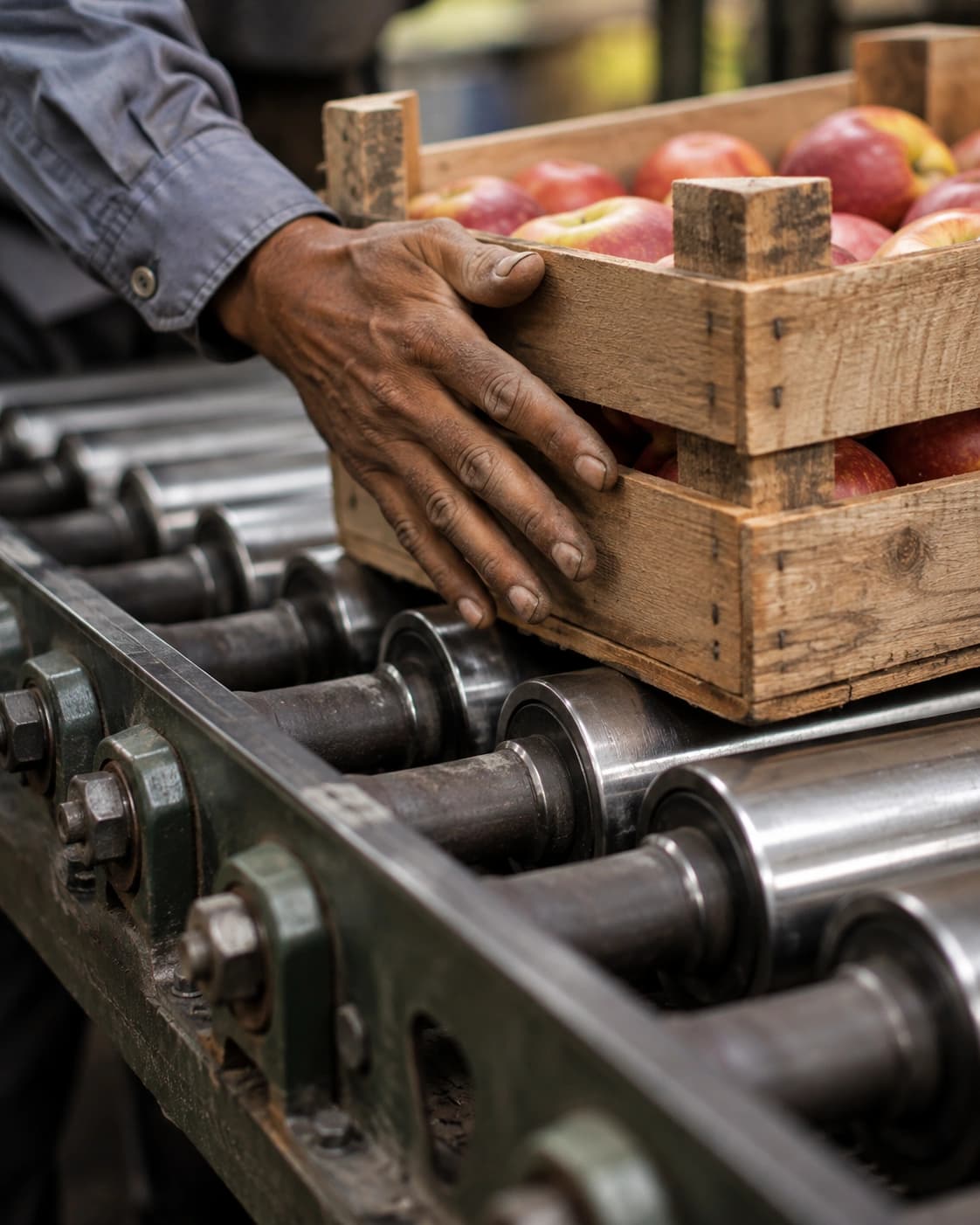
This is the simple one. Boxes and crates roll along a bed of rollers, either pushed by hand or motor-driven, between grading, packing, and storage. It comes in manual or motor-driven versions, rated for loads between 200 and 2,000 kg, with a 1 to 10 HP motor on the powered version. If you are just trying to stop workers from carrying crates by hand across the shed, this is usually the answer.
Table conveyor: for inspection and packing together
This one sets the belt at table height so workers standing on either side can inspect produce and pack it in the same motion, without the belt stopping. It is common in packing houses where quality checks and packing happen as one continuous step, not two separate ones. Same load and motor range as the roller conveyor, but the table height and worker access are the real difference.
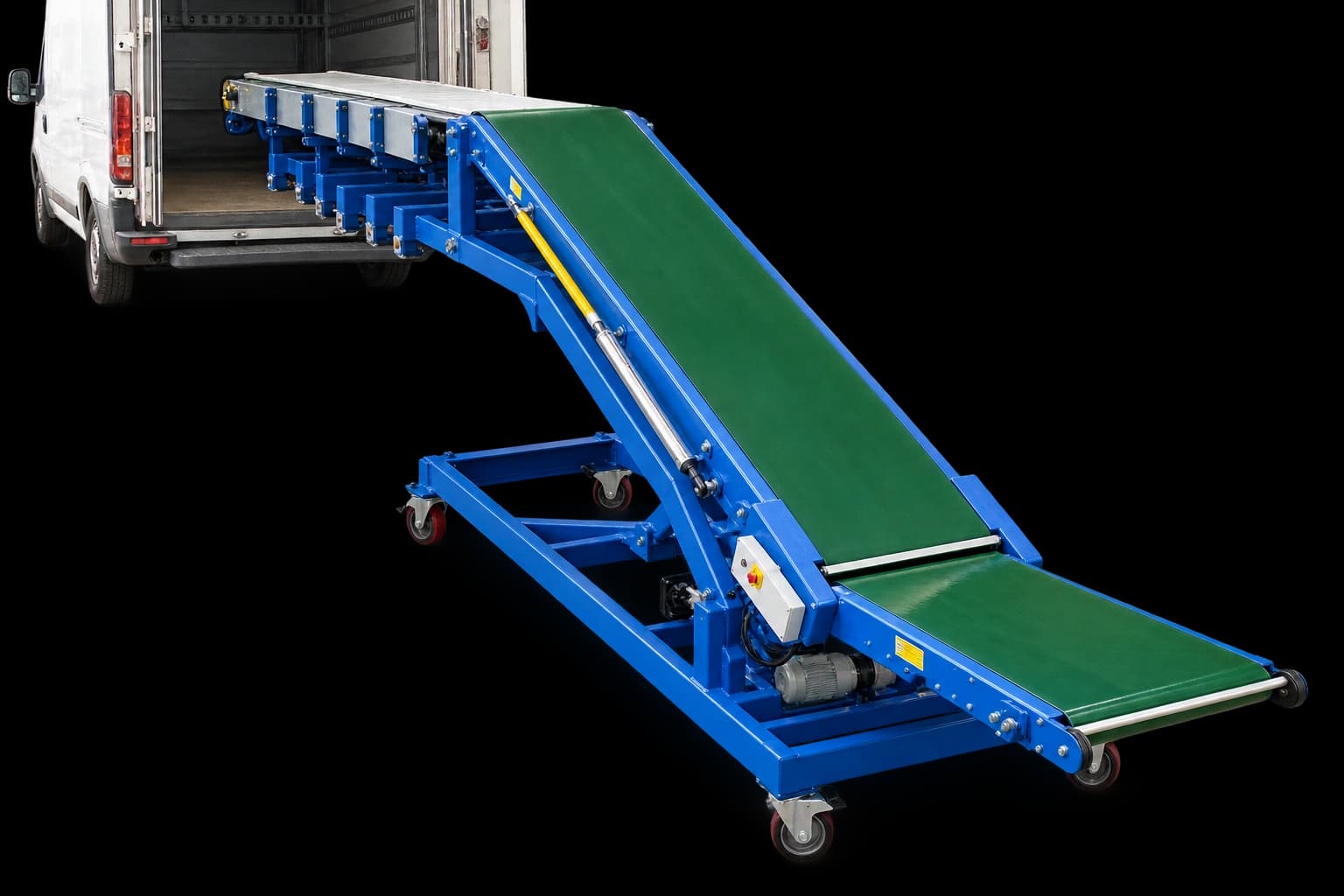
Truck loading conveyor: for fast dispatch
This is a smaller, portable, inclined conveyor built to carry packed goods straight from the packing area onto a truck bed. It runs on a compact 1 to 3 HP motor. If your team is currently carrying crates up into trucks by hand and it is slowing down dispatch days, this is the one that fixes that specific problem.
Heavy-duty options for non-food material
If you are moving stone, sand, or mineral material instead of produce, none of the above are rated for that kind of abrasive load. A heavy-gauge rubber belt conveyor built for quarry and crusher plant conditions is a different product entirely, and using a standard produce conveyor for that kind of material wears it out fast.
What to tell us
Tell us what you are moving, roughly how heavy the loads are, and where it needs to go on your line, from intake to packing, or packing to the truck. That is usually enough for us to point you at the right type before we even talk numbers.